
House Flipper: Buy, Renovate, and Sell Homes for Huge Profits
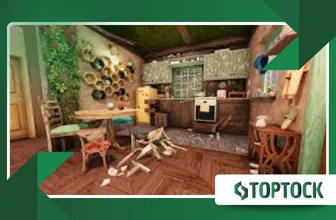
The digital hammer is swinging, and the virtual real estate market is booming.
Anúncios
House Flipper, the highly engaging simulation game, offers players an unprecedented, low-risk dive into the rewarding, yet challenging, world of property buying, renovation, and profitable resale.
This title transcends simple escapism, serving as a surprisingly insightful microcosm of the actual home improvement industry.
Players don’t just game; they learn the fundamental mechanics of maximizing property value through strategic upgrades and meticulous interior design.
Is it merely a game, or a genuinely valuable exercise in resource management and aesthetic judgment?
Anúncios
What Makes House Flipper an Enduringly Popular Simulation?
Its popularity stems from a brilliantly intuitive gameplay loop.
The core experience is immensely satisfying, transforming dilapidated, filthy properties into sparkling, move-in-ready dream homes.
This visceral transformation feeds directly into the human desire for order and creation.
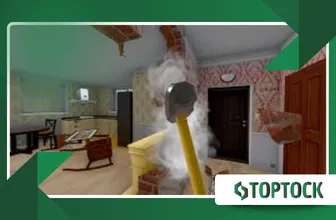
The satisfaction of scrubbing grime, demolishing walls, and applying a fresh coat of paint is immediate.
The game cleverly breaks down massive renovation projects into achievable, bite-sized tasks.
Players start small, tackling basic cleaning and maintenance jobs for virtual clients.
These initial contracts build capital and unlock essential tools and skills.
Eventually, players buy their own properties, taking full creative control over the renovation process.
The game’s comprehensive suite of customization options supports endless creativity.
From plumbing and electrical work to landscaping and interior decoration, every detail matters.
The meticulous attention to detail in the physics and visual design contributes to its immersive quality.
It’s a digital sandbox where players can experiment without the crippling financial fear of real-world mistakes.
This safe environment for experimentation fuels its continuous appeal across diverse player demographics.
How Does the Game’s Renovation Cycle Mirror Real-World Flipping Strategies?
The economic model within House Flipper closely mimics real-world property valuation principles.
The player’s profit is determined by the purchase price, the cost of materials and labor, and the final sale price.
Strategic spending is paramount; over-improving a property in a less desirable area often leads to diminished returns.
Read more: Game Dev Tycoon
This is the essence of real estate: finding the perfect balance between investment and market expectation.
A fundamental real-world strategy is the Rule of 70%, which states that an investor should pay no more than 70% of the home’s after-repair value (ARV) minus the estimated cost of repairs.
While the game uses its own formula, the principle remains constant.
Example (Strategic Kitchen Upgrade): A player purchases a small suburban home for $50,000. It is dated but structurally sound.
Instead of opting for the most expensive marble countertops, they select high-quality, mid-range laminate and new stainless-steel appliances.
This choice keeps the renovation budget lean while dramatically increasing buyer appeal. The lower investment on a high-impact area ensures a robust profit margin.
Example (The Power of Curb Appeal): A property has terrible, overgrown landscaping. A player spends $1,500 on new sod, a few shrubs, and a freshly painted front door.
This small investment creates a fantastic first impression, often leading to a higher initial offer from the virtual buyers.
This aligns perfectly with studies showing the massive impact of curb appeal on perceived home value.
What Is the Role of Interior Design in Maximizing Profit?
Design choices are not just aesthetic; they are economic levers. The game features a variety of potential virtual buyers, each with unique preferences and needs.
Successfully matching the renovation style to the target buyer demographic significantly increases the final sale price.
For instance, a buyer looking for a family home values extra bedrooms and a well-designed playroom.
Check this out: Idle Life Sim
Conversely, a young, professional buyer might prioritize an open-plan living space and a modern home office.
Ignoring these virtual market demands can cost the player thousands in potential profits.
The design phase is where players utilize their accumulated furniture and decor items, effectively staging the property.
Think of the design as the marketing package for the house.
Staging a home can increase the final sale price significantly, according to a 2021 report by the National Association of Realtors (NAR), which found that 82% of buyer’s agents said staging a home made it easier for a buyer to visualize the property as their future residence.
| Renovation Type | Average Cost (Game Estimate) | Buyer Interest Impact | ROI Potential (Estimated) |
| Basic Cleaning/Repair | Low | Moderate | High (Minimizes Discount) |
| Kitchen Remodel (Mid-Range) | Moderate | High | Excellent |
| Bathroom Upgrade (New Fixtures) | Moderate | High | Very Good |
| Painting/Flooring | Low-Moderate | Very High | Excellent |
Why Is Time and Efficiency the Ultimate Virtue in Flipping?
In real-world flipping, time is money; holding costs (interest, taxes, utilities) can quickly erode profits.
While House Flipper doesn’t penalize players with daily interest, efficiency in execution is rewarded.
The faster a player completes a renovation, the quicker they can realize their profit and reinvest the capital into the next project.
++ Oceanhorn
This process is like a fast-moving stream, constantly circulating resources for maximum gain.
The process of playing the game is similar to being a conductor of an orchestra.
The house is the score, and all the tools and subcontractors (painting, plumbing, etc.) are the musicians.
The conductor’s (player’s) skill lies not just in their individual ability but in their power to coordinate all the elements seamlessly for a harmonious, profitable finale.
A good conductor doesn’t waste a single note or moment.
Ultimately, players are testing and refining their ability to manage resources, schedule work, and identify market value.
The game is a surprisingly insightful training ground for entrepreneurs and design enthusiasts alike.
It offers a high-value skill development path masked as entertainment.
The sheer depth of the mechanics ensures that players remain engaged for hundreds of hours.
Where Does House Flipper Go Next in the Simulation Genre?
With new DLCs like “Pets” and “Farm,” the developers continue to expand the scope and complexity of the simulation.
They keep adding new environments and challenges, preventing the core loop from growing stale.
These updates often introduce more niche market demands, pushing players to be more adaptive and creative in their approach.
This continuous evolution keeps the House Flipper community vibrant and the game’s relevance high.
The success of the franchise proves that players crave realistic, goal-oriented simulations that appeal to their inner desire to build and improve.
The game is constantly raising the bar for what a simulation should offer.
What more could a dedicated property enthusiast ask for than a virtually limitless supply of fixer-uppers to transform?
House Flipper
House Flipper is more than a simple distraction; it is a profound lesson in the economics of home renovation and design.
It successfully captures the core excitement of turning a neglected asset into a profitable venture.
The game’s smart design, realistic economic models, and constant content evolution guarantee its place as a leader in the simulation genre for years to come.
Frequently Asked Questions
Is House Flipper available on multiple platforms?
Yes, it is available on PC (Steam), Nintendo Switch, PlayStation, and Xbox consoles, making it accessible to a wide audience.
Does the game accurately represent the time commitment for real-world renovation?
While the in-game action is sped up for gameplay, the sequence of tasks—demolition before construction, plumbing before wall finishing—accurately reflects the real-world order of operations in renovation projects.
Are there competitive elements in the game?
The core game is a single-player experience, but players often compete informally by sharing their most creative designs and highest-profit flips online within the community.
++ BUILD YOUR HOUSE FROM THE GROUND UP!
Popular Now