Mobile Gaming in 2026: The Top Trends Shaping the Future of Play
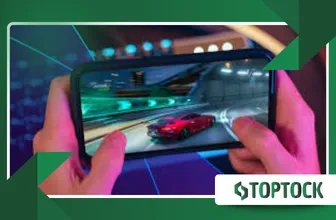
The landscape of Mobile Gaming in 2026 promises a thrilling evolution, moving far beyond simple casual experiences.
Anúncios
This sector is not just growing; it’s aggressively innovating, redefining what a handheld gaming device truly represents.
For those deeply invested in the entertainment industry, understanding these shifts is paramount.
The convergence of cutting-edge hardware and sophisticated software is catalyzing this remarkable transformation.
Mobile platforms are quickly closing the fidelity gap with consoles and PCs, demanding more from developers.
Anúncios
This escalating capability fuels the next wave of immersive and persistent digital worlds.
How is Cloud Streaming Revolutionizing Mobile Gaming?
Cloud gaming has finally hit its stride, overcoming earlier hurdles of latency and widespread adoption.
It fundamentally changes the barrier to entry for high-fidelity titles. Players no longer need top-tier, expensive smartphones to enjoy graphically demanding games.
The infrastructure for seamless streaming, backed by robust 5G networks and edge computing, is now mature.
This technology democratizes access to “AAA” experiences right in the palm of your hand.
It represents a paradigm shift from hardware dependency to service ubiquity.
This accessibility broadens the player base immensely, inviting a more diverse audience into complex gaming genres.
The subscription model attached to these services also provides developers with predictable, recurring revenue streams. It’s an undeniable win-win for creators and consumers alike.
What Role Will Cross-Platform Play Have in 2026? Mobile Gaming in 2026
True cross-platform play is becoming a standard expectation, not a mere feature, for major releases.
The silos separating mobile, PC, and console communities are steadily collapsing. Gamers want to play with their friends, regardless of the device they own.
Developers are designing their games from the ground up to ensure feature parity and consistent performance across all ecosystems.
This holistic approach ensures a unified player experience and maximizes the game’s longevity. It significantly expands the potential market size for any new title.
This integration fosters larger, more vibrant communities, essential for genres like massively multiplayer online games.
The ability to seamlessly jump between a PC and a phone without losing progress is a powerful retention tool.
This seamless transition is key to the persistent nature of modern gaming.
Why is Hyper-Engagement a Core Strategy for Mobile Developers?
Simple, one-off download games are struggling to compete with services that prioritize long-term player investment.
The focus has decisively shifted to creating deep, persistent worlds with continuous content updates. This strategy drives hyper-engagement.
Read more: From Downloads to Dollars
Developers utilize live-service models, introducing new seasons, events, and narrative arcs on a predictable schedule.
This constant flow of novelty keeps the existing player base active and attracts new users consistently. It turns a game into a dynamic, evolving digital hobby.
How are AI and Procedural Generation Enhancing Content?
Artificial intelligence is increasingly playing a direct role in content creation and personalization within mobile games.
AI-driven systems are now capable of generating vast amounts of unique in-game content.
This includes dynamic quests, endless dungeon layouts, and personalized non-player character (NPC) interactions.
++ Fire Emblem Shadows Is Live
This procedural generation is crucial for sustaining the hyper-engagement demanded by modern players.
It significantly reduces the development burden of manually creating every piece of content.
The result is a richer, virtually inexhaustible play experience tailored to individual player habits.
For instance, consider a dynamic open-world RPG where the AI generates new biomes and enemy types based on the player’s current level and historical combat preferences.
This is a game-changer for replayability.
How is AR and Mixed Reality Elevating Mobile Gaming?
Augmented Reality (AR) and Mixed Reality (MR) are moving beyond novelties and are integrating into core gameplay loops.
The increasing sophistication of mobile camera and sensor technology enables genuinely transformative experiences.
Games are beginning to blend the digital layer with the physical world in inventive ways.
Read here: 2048 Balls 3D
This creates unique gameplay opportunities that rely on spatial awareness and real-world interaction, moving beyond simple location-based hunting.
It introduces an exciting new dimension of immersion and physical activity. The blending of realities is poised to be a significant feature of Mobile Gaming in 2026.
The global mobile gaming market was valued at $135.8 billion in 2024, and is projected to reach over $200 billion by 2028, according to recent analysis from Statista.
This robust growth confirms the sustained, aggressive investment in the sector.
What Impact Will Blockchain and Digital Ownership Have?
The integration of blockchain technology and Non-Fungible Tokens (NFTs) into games is maturing, shifting from speculative hype to genuine utility.
Players are increasingly seeking verifiable digital ownership of their in-game assets. This trend is not about quick profit; it’s about control.
This new ownership model allows players to truly possess unique items, skins, or even virtual real estate.
It fosters a player-driven economy, adding a layer of intrinsic value to long-term engagement.
The concept of “play-to-own” is replacing “play-to-earn” as the core philosophy.
Why is Verifiable Ownership Important to Players?
Verifiable ownership fundamentally changes the player’s relationship with the game world.
If a player spends 500 hours acquiring a rare sword, blockchain guarantees that item is theirs, verifiable on a public ledger.
This security and permanence are highly attractive. It’s an incentive that traditional, closed server economies simply cannot match.
Example: The ‘Digital Artisan’ Economy
Imagine an in-game system where players can use resources they’ve mined to craft unique cosmetic items, verified as NFTs.
They can then sell these items directly to other players for real-world value, effectively becoming ‘digital artisans.’
This is a thriving, secondary micro-economy that enhances player retention and creativity.

Why is Accessibility a Key Focus for Mobile Gaming in 2026?
As the market expands and the audience diversifies, the focus on inclusive design and accessibility is paramount.
Developers are actively integrating features to cater to players with various physical and cognitive needs. This commitment is not just ethical; it’s a smart business strategy.
Controls are becoming more customizable, and features like text-to-speech, colorblind modes, and one-touch simplification are standard.
The industry is recognizing that making a game accessible maximizes its potential player base. Mobile Gaming in 2026 must be inclusive to be successful.
The evolution of gaming mirrors the development of modern transportation. Initially, cars were a luxury, difficult to operate, and restricted to paved roads.
Now, they are ubiquitous, easier to drive, and feature numerous assistive technologies.
Similarly, gaming is becoming less about high skill barriers and more about broad, enjoyable participation.
Where is the Future of Mobile Gaming Heading?
The mobile platform is solidifying its position as the dominant force in interactive entertainment.
Its power lies in its ubiquity—it is always on, always connected, and always in the player’s pocket.
The trends of cloud streaming, cross-platform integration, and deep engagement are converging.
This convergence is creating incredibly rich, persistent, and accessible digital worlds.
| Trend | Core Benefit to Player | Impact on Development |
| Cloud Streaming | Access to AAA titles on budget devices. | Reduced focus on local optimization. |
| Cross-Platform | Play with friends regardless of device. | Requirement for unified back-end systems. |
| Hyper-Engagement | Constant new content and events. | Shift to live-service/seasonal model. |
| Digital Ownership | Verifiable ownership of in-game assets. | Integration of blockchain/NFT technology. |
Example: Generative AI for Game Masters
Consider a dungeon crawler where a Generative AI acts as a perpetual ‘Game Master.’
It monitors player behavior, designs counter-challenges in real-time, and subtly adjusts the difficulty.
This creates a perpetually fresh, narrative-driven experience, impossible with traditional scripting.
Ultimately, the goal is total immersion and unconstrained access.
Can we truly imagine a time when the difference between console-quality and mobile-quality games is virtually meaningless?
The future of Mobile Gaming in 2026 is not about what you play, but where and how you choose to play.
The handheld device is evolving into the definitive portal to vast digital universes.
Frequently Asked Questions
Is a high-end phone still required for the best mobile games in 2026?
No. The rise of sophisticated cloud streaming services means that many graphically intensive games can be played smoothly on mid-range or even older phones.
A high-end device is only necessary for playing native, non-streamed titles at peak graphical settings.
Will mobile games continue to focus on microtransactions?
Yes, microtransactions will persist, but the trend is shifting towards transparent, value-driven purchases, like battle passes and cosmetic items.
The focus is moving away from aggressive, random-chance “loot box” mechanics in favor of predictable, player-controlled purchases.
What is the biggest challenge facing the growth of Mobile Gaming in 2026?
The primary challenge is fragmentation across platforms and app stores.
However, the industry is mitigating this through universal development engines and prioritizing cross-platform connectivity.
The industry is also facing increasing scrutiny regarding data privacy and fair monetization practices.
++ How culture and technology are shaping the future of games
++ 7 Huge Gaming Industry Trends (2025 & 2026)
Popular Now