Nuts and Bolts Puzzle Solutions for Challenging New Stages
Solving a complex Nuts and Bolts puzzle requires a blend of spatial reasoning, strategic sequence planning, and cold logic.
Anúncios
As physics-based mobile puzzle games evolve in 2026, developers are introducing multi-layered mechanical barriers, gravity-dependent dynamic plates, and strict color-matching parameters to test players.
Clearing advanced stages no longer relies on random trial and error; it demands a systematic approach to unseating pins and managing board physics.
Key Takeaways
- Clear lower layers first: Free bottom plates to reduce secondary physics collisions.
- Track screw capacity: Monitor open hole limits to prevent soft-locking your board.
- Identify key anchor pins: Pinpoint which specific bolt holds multiple heavy elements.
- Manage color groups: Plan color matches backward from the final target slot.
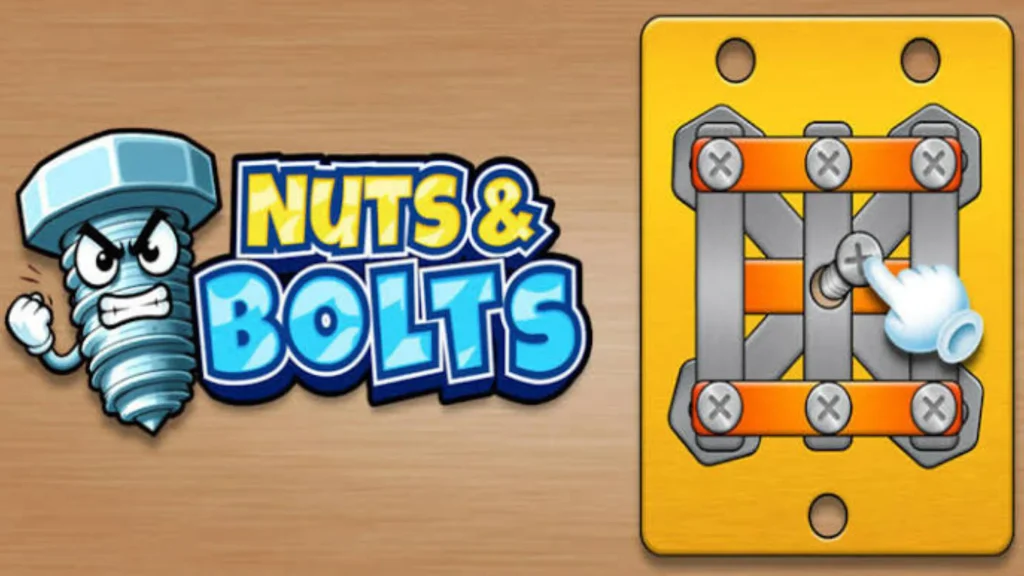
What Makes Late-Game Nuts and Bolts Stages So Difficult?
Modern puzzle designs introduce dynamic variables that fundamentally change board behavior.
Static wood and iron plates have given way to hinged beams, glass obstacles that shatter under pressure, and magnetic bolts that shift neighboring pieces automatically.
Anúncios
Understanding these mechanics prevents premature restarts:
Layered Plate Weight: Upper plates pin down lower elements. Removing an upper bolt without securing the lower plate can block underlying target holes.
Restricted Spare Hole Capacity: High-level stages limit vacant screw slots to one or two spaces, drastically reducing your room for tactical error.
Color-Coded Lock Systems: Advanced levels force you to clear specific bolt colors in sequence before unlocking primary structural pins.
How to Solve Advanced Nuts and Bolts Levels Step-by-Step
Mastering complex stages requires a repeatable blueprint. Executing your moves in the correct order keeps your spare holes open and clears structural weight efficiently.
Core Execution Flow:
Analyze Anchor Pins ➔ Isolate Free Holes ➔ Clear Obstructing Plates ➔ Execute Color Sequences
1. Identify and Isolate Key Anchor Pins
Before tapping your first screw, trace every plate back to its primary support. Anchor pins hold two or more overlapping plates simultaneously.
++ Match Factory Smart Sorting Techniques That Improve Scores
Unscrewing an anchor pin prematurely can cause heavy plates to drop into lower gaps, permanently covering open holes you need later.
2. Calculate the Hole Budget
Count the total number of empty holes on the board versus the number of bolts you must temporarily park.
If a stage offers two empty holes and requires moving a three-bolt chain to release a plate, you must clear space elsewhere before touching that chain.
3. Leverage Gravity and Pendulum Motion
When an asymmetric plate loses its secondary bolt, it swings downward on its remaining pivot.
Use this natural rotation to reveal hidden holes behind suspended beams instead of removing both bolts immediately.
Read more: Screw Jam Best Strategies for Clearing Complex Screw Boards
Which Core Mechanics Define Top-Tier Stages?
To visualize how mechanical elements impact your solving strategy, compare these primary stage obstacles found in late-game levels:
| Obstacle Type | Primary Impact | Recommended Solution Strategy |
| Hinged Beams | Swings dynamically across free holes when unsupported. | Lock down adjacent pins before removing primary support. |
| Glass Barriers | Breaks when hit by falling metal plates, altering the board layout unexpectedly. | Support weight above glass plates using temporary bolt holds. |
| Linked Color Screws | Requires identical color matching before a bolt detaches completely. | Prioritize clearing matching color trays first to free up buffer space. |
| Frozen Slots | Prevents bolt placement until an adjacent mechanical trigger releases. | Target nearby structural pins to activate release levers early. |
Why Is Sequence Planning Crucial for Color-Matching Stages?
Color-coded stages introduce secondary loss conditions. Placing a red bolt into a green-designated buffer slot reduces your active board space.
Research into cognitive mechanics shows that spatial reasoning improves significantly when breaking complex physical puzzles into discrete, sequential sub-goals.
Cognitive performance studies published by the National Center for Biotechnology Information, highlight how working memory limits influence step-by-step problem-solving efficiency in spatial tasks.
To maintain clean board state management:
- Locate the Primary Color Hub: Identify which color sequence unlocks the highest number of structural pins.
- Clear Buffer Slots Early: Never fill your last empty hole with a non-matching color unless it immediately completes a plate drop.
- Work Backward From the Target: Trace where each colored bolt must land before moving the initial pin out of its starting position.
When Should You Use In-Game Boosters Wisely?
Save your power-ups—like extra hole unlocks or board resets—strictly for multi-layered stages with narrow error margins.
Activating a booster on an early mistake wastes resources on a board you can still recover through systematic sequence planning.
++ Hypnospace Outlaw Brings Retro Internet Life to Mobile Players
Instead, deploy them only when a verified mathematical soft-lock blocks your final anchor pin, guaranteeing that the item immediately yields a complete level victory.
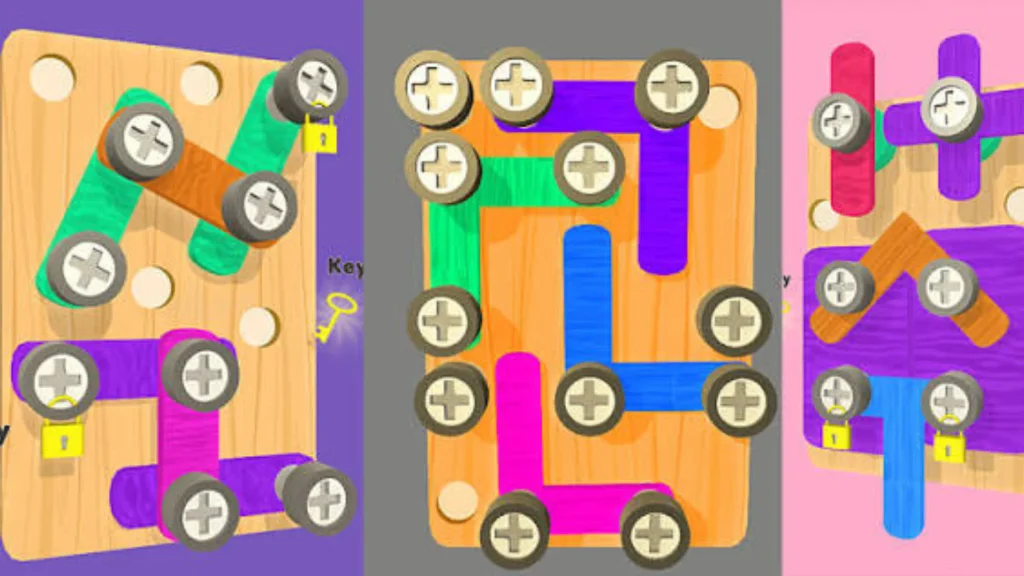
How Do You Escape a Soft-Lock Without Restarting?
Soft-locks occur when all empty holes are occupied by unmatched bolts, leaving zero legal moves.
Recognizing an impending soft-lock early allows you to pivot before consuming a stage attempt or using premium boosters.
Check Hidden Rotations: Look for suspended plates that can be nudged by existing pins to uncover partially hidden holes.
Undo Inefficient Moves: If your game mode includes a step-back feature, reverse your last two placements to reclaim a free hole rather than pushing forward blindly.
Sacrifice Secondary Plates: Sometimes dropping an unimportant plate into a lower area frees up two crucial top-level holes, clearing room for your primary target sequence.
Game developers build these stages using strict mathematical graph theory to ensure every layout has at least one deterministic solution path.
Educational resources like MIT OpenCourseWare, provide deep technical breakdowns on graph algorithms and spatial logic structure if you enjoy exploring the underlying logic design of modern games.
Frequently Asked Questions
What is the most effective starting move on complex Nuts and Bolts stages?
Always analyze the bottom layer of plates first. Locate bolts that hold multiple overlapping pieces and trace which moves are required to free up at least one additional empty hole before shifting secondary pins.
Why do plates get stuck even after removing all visible screws?
Plates often catch on invisible hitboxes or adjacent swinging beams due to gravity physics. Ensure the path directly below or around the plate is completely clear of swinging structural elements.
How do I manage levels with only one empty hole?
Focus on one-to-one transfers. Move a bolt to the single open hole only if that specific action drops a plate and immediately opens a new, permanent hole on the main board.
++ What Is a Nut Sort & Bolt Sort Puzzle?
++ Nuts And Bolts – Screw Puzzle Answers
Popular Now