Seaside Escape Merge Features That Improve Progression
Seaside Escape combines merge puzzle mechanics with narrative restoration, creating a progression system that rewards strategic planning and efficient board management.
Anúncios
Merge puzzle games have evolved beyond simple matching activities, offering players long-term goals such as rebuilding towns and unlocking fresh storylines.
Understanding how progression mechanics interact within the game allows players to optimize energy consumption, maximize board efficiency, and move through chapter milestones faster.
This guide explores the core merge features, item generation dynamics, and strategic systems that drive advancement.
Key Takeaways
- Merging items directly generates the resources required to complete story tasks, unlock new buildings, and progress through chapters.
- Upgrading producer items yields higher-tier components, reducing overall energy expenditure per completed order.
- Expanding inventory slots and keeping board space open prevents progression bottlenecks caused by clogged grids.
- Participating in limited-time mini-games provides bonus energy, high-tier chests, and rare merge items.
The Core Progression Loop: Merging for Story Tasks
In Seaside Escape, progression is directly tied to restoring a seaside town.
Anúncios
Unlike puzzle games where boards operate independently of the main plot, every action on the board supports narrative advancement.
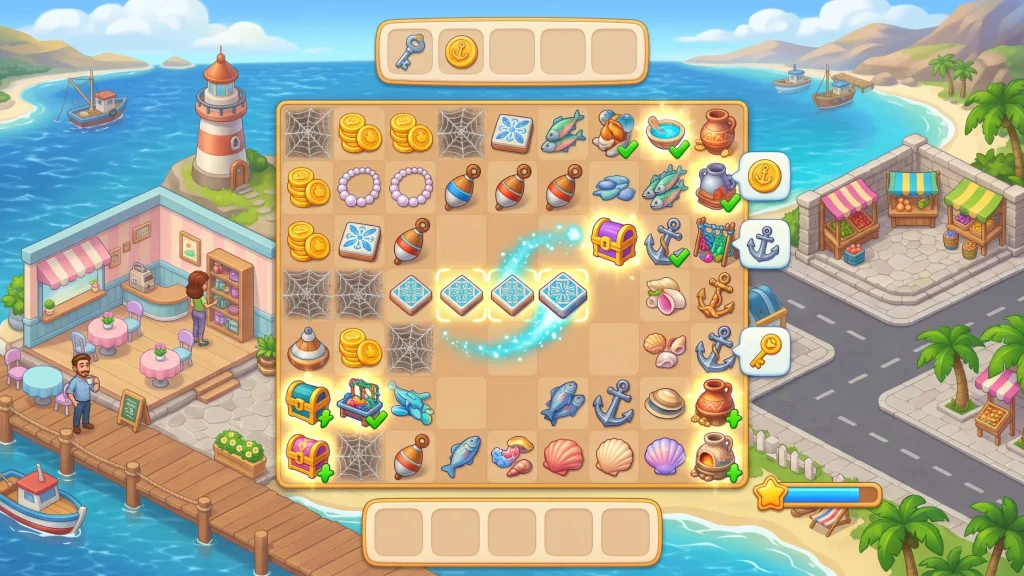
Players receive customer orders at the top of the screen requesting specific merged items.
Completing these orders awards coins and task currency such as stars or tools, which are used to clean, renovate, and furnish town locations.
Completing all tasks in a designated zone completes the current chapter. Unlocking new chapters introduces new customer request chains, higher-level producer structures, and larger town areas with distinct visual themes.
To better understand how player engagement and progression loops shape casual gaming, you can explore detailed sector analyses on the Game Developer portal.
Advanced Producer Mechanics and Energy Efficiency
Producers are board items that spawn basic merge components in exchange for energy points. Managing your producers efficiently is the single most critical factor in rapid level progression.
Merging lower-tier producer parts creates higher-tier producers. Higher-tier producers offer several key advantages:
- Higher-Level Spawns: Instead of spawning Level 1 items, upgraded producers frequently drop Level 2 or Level 3 items, saving energy.
- Faster Cooldowns: Higher-tier producers recharge faster after running out of spawn charges.
- Better Rare Drops: Certain quest lines require rare side-chain items that only drop from upgraded producers.
Energy recharges automatically over time, but efficient players stretch every point. Focus on active orders to avoid merging items randomly without a goal, as unfocused merging wastes energy and clogs the board.
++ Love & Pies Puzzle Mechanics That Keep Players Engaged
Save small energy items and merge them to their maximum tier before claiming them to get the highest total energy points.
Storage, Inventory, and Board Space Management
Board clutter is the primary progression bottleneck in merge games. When a board runs out of space, players cannot spawn new items, halting progress.
Seaside Escape features an inventory storage system that allows players to stash items off the main board. Prioritize spending coins or gems to unlock additional storage slots early in the game.
Items to keep in storage include high-tier items needed for upcoming tasks, unused producer components awaiting duplicates, and specialized event items.
Read more: Goods Sort Organization Tricks That Save Every Move
New grid tiles often start locked behind cobwebbed items. Merging a playable item with a cobwebbed item of the same tier frees the locked tile, permanently expanding playable space.
Summary of Key Progression Features
The table below outlines the core features in Seaside Escape and how each contributes directly to overall game progression.
| Game Feature | Primary Mechanism | Progression Impact | Optimization Tip |
| Task Orders | Deliver specific merged items to customers | Awards coins and story currency | Prioritize orders with high-tier producer requirements first |
| Producer Merging | Combine matching producer parts | Lowers energy cost per target item | Merge producer parts only when board space allows |
| Board Expansion | Unlock tiles by clearing cobwebbed items | Increases board capacity and grid mobility | Target cobwebbed tiles early in new chapters |
| Inventory Storage | Stash inactive items off the main grid | Prevents board deadlocks | Store high-tier items and producer parts to keep active board clean |
| Special Events | Limited-time mini-games and challenges | Yields high-value chests, gems, and energy | Save energy crates to use during active bonus events |
Practical Guidance for Faster Advancement
To maintain a consistent pace through chapters, follow these operational habits:
++ Melon Sandbox Lets Players Create Wild Physics Experiments
- Always look for chain merges on the board before tapping producers.
- Avoid selling high-tier items, as they require substantial energy to recreate.
- Claim daily login rewards, daily task chests, and free daily shop items for consistent passive energy gains.
- Align your regular task fulfillment with active side events to earn double rewards for the same energy spent.
Strategic Synergies in Special Events
Participating in limited-time events is crucial for accelerated progression. These events often feature separate, temporary boards or specific merge chains that run alongside the main game.
By engaging with them, players can earn high-value rewards, such as substantial energy boosts, rare producer parts, and infinite energy markers.
Strategically timing the use of saved energy crates during these events maximizes item generation and allows players to complete exclusive event orders, yielding resources that significantly bootstrap main board progress once the event concludes.
Conclusion
Progression relies on balancing energy spending, producer upgrades, and grid organization.
By focusing on active orders, expanding storage early, and maximizing energy efficiency, players can seamlessly unlock new town chapters and progress without unnecessary delays.
For more insight into mobile game design and mechanics optimization, check out resources on Pocket Gamer.
Frequently Asked Questions
What is the best way to get more energy in Seaside Escape?
The most reliable ways to acquire energy are merging energy items to their maximum level before claiming them, claiming daily free energy from the shop, completing daily tasks, and participating in limited-time events.
Should I merge my producers immediately?
In most cases, yes. Higher-tier producers yield higher-level item drops, saving energy overall.
However, if merging two producers leaves you with only one producer that goes on cooldown quickly, consider holding off until you have extra producer parts.
How do I unlock more space on the board?
Clear cobwebbed items on the board by merging them with matching active items from your grid. Expanding into new town zones through story tasks also expands board space in designated areas.
What should I do when my board is completely full?
First, check for any possible merges on the active board. Next, sell low-level, easily replaceable items to free up grid tiles, or move high-value items into your inventory storage.
++ Seaside Escape : Merge & Story
++ Seaside Escape®: Merge & Story 1.49.0
Popular Now