Console-Like Mobile Games: Why AAA Ports Are Dominating 2026 Debate
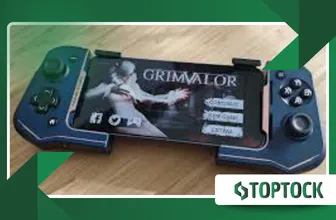
Console-Like Mobile Games are no longer a distant promise; they represent the current standard for high-end handheld experiences, fundamentally reshaping how publishers approach global software distribution strategies in 2026.
Anúncios
Summary of Key Insights
- Hardware Sophistication: The tangible impact of 3nm architecture and thermal management.
- The AAA Shift: Why major publishers are prioritizing simultaneous cross-platform launches.
- Native Power: The technical pivot back toward local rendering over cloud streaming.
- The 2026 Pulse: A statistical overview of the current mobile gaming landscape.
- The Horizon: What to expect from neural processing units and future hardware iterations.
What defines Console-Like Mobile Games in 2026?
The benchmark for high-end mobile entertainment has moved past simple visual mimicry. We are now seeing true parity with dedicated home hardware, largely fueled by the maturity of Unreal Engine 5.4.
Today’s smartphones leverage dedicated ray-tracing cores to manage light bounces and reflections in real-time. This provides a level of visual fidelity that, quite frankly, was exclusive to high-end desktop GPUs just a few seasons ago.
Authentic Console-Like Mobile Games integrate complex physics and advanced AI behaviors. This ensures the core gameplay loop remains identical whether you are tapping a screen on a train or sitting at a PC.
Developers have finally embraced “unified codebases.” This allows them to push critical updates simultaneously across all platforms, effectively killing the traditional, frustrating delay between console debuts and their mobile counterparts.
Anúncios
Why are AAA ports dominating the gaming industry debate?
The current discourse centers on the sheer audacity of porting massive titles like Resident Evil or Death Stranding to devices that slide into a pocket. There is something inherently disruptive about it.
Critics often wonder if thermal throttling or battery constraints will eventually hit a ceiling. It is a valid concern—graphical demands scale upward every year, often faster than cooling technology can keep pace.
Yet, the arrival of active cooling accessories and hyper-efficient silicon has turned the tide. Modern devices sustain high performance for hours without the internal components feeling like they are on the verge of a meltdown.
++ Rainbow Six Mobile Launch News: Tactical Shooter Global Release Update
Market analysts are noticing a massive shift: the accessibility of smartphones provides an install base that traditional consoles can’t touch. This makes AAA ports not just a technical flex, but a financial necessity.
How does 2026 hardware support such demanding titles?
Apple’s A-series and Qualcomm’s Snapdragon 8 Gen 5 have introduced specialized neural engines. These handle upscaling tasks—similar to DLSS—optimized specifically for the tight mobile power envelope.
These chips utilize a refined 3nm process. This architecture allows for billions of additional transistors that manage complex shaders without vaporizing the battery life in twenty minutes.
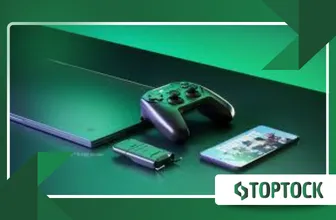
Standardized support for high-polling rate controllers and ultra-low latency wireless audio has bridged the final gap. The tactile experience of these games finally feels professional rather than a compromised afterthought.
Read more: Sensor Tower Report 2026: Mobile Game Downloads Hit New Global Record
Integrated cooling vapor chambers, once a niche “gamer phone” feature, are now standard in flagships. They allow for sustained peak performance during the most intense, graphically demanding sequences without a frame-rate dip.
Which publishers are leading the mobile transition?
Capcom and Ubisoft have pioneered the “Universal Purchase” model. Buy a game once, and it’s yours on Mac, iPad, and iPhone—a move that treats the smartphone as a legitimate ecosystem.
This strategy frames the smartphone as a true extension of the home console. It’s a refreshing departure from the era of watered-down experiences or predatory, microtransaction-heavy spin-offs.
According to the Newzoo Global Games Market Report, the convergence of mobile and console revenue has forced every major studio to shred and rewrite their long-term development roadmaps.
The shift is most evident in franchises like Assassin’s Creed. These titles now launch with full feature parity, including high-resolution textures and volumetric lighting that were recently deemed impossible for handhelds.
2026 Mobile Performance Benchmarks
| Feature Category | 2024 Standard | 2026 AAA Standard | Performance Impact |
| Resolution | Variable 1080p | Native 1440p + Upscaling | 40% Clarity Increase |
| Frame Rate | 30 – 60 FPS | 90 – 120 FPS Stable | Smoother Input Response |
| Ray Tracing | Software-based | Hardware-accelerated | Realistic Lighting |
| Storage Tech | UFS 3.1 | UFS 4.0 / NVMe | Near-instant Loading |
What are the technical challenges for mobile developers?
Optimization remains the ultimate hurdle. Engineers must ensure games run smoothly across a chaotic variety of chipsets without gutting the artistic vision of the original creators.
Shaders must be pre-compiled to avoid “stuttering,” a common ghost in the machine of porting. This requires deep, expensive collaboration between software houses and chip manufacturers like ARM.
The sheer size of these titles—often exceeding 50GB—demands better compression. We are seeing a move toward modular downloads, where players only install the assets they actually need for their current level.
++ Sneaky Sasquatch: Explore the Woods in a Mischievous Outdoor Adventure
Touch interfaces also need a total rethink. Providing the precision required for competitive play usually results in highly customizable layouts that attempt to mimic the ergonomics of physical controllers.
When will mobile gaming fully replace traditional consoles? Console-Like Mobile Games
Despite the incredible power of modern phones, they probably won’t kill the console. Dedicated hardware still offers the thermal headroom necessary for true 4K, 120Hz output that a pocket device can’t sustain.
Instead, we are entering a phase of “hybridization.” The mobile device becomes the primary screen for the commute, while the console remains the high-fidelity sanctuary for the living room.
The rise of these high-caliber titles validates a simple truth: storytelling and complex mechanics aren’t bound to a plastic box under the TV. They belong wherever the player happens to be.
This evolution makes gaming a more ubiquitous part of life. You can transition between environments without losing progress, without compromise, and most importantly, without feeling like you’re playing a “lesser” version.
The era of the “mobile version” as a synonym for “downgraded” is dead. With hardware finally catching up to developer dreams, the boundary between platforms is blurring into irrelevance.
As we move through 2026, the focus will shift from “can it run?” to “how much further can we push it?” The winner in this arms race is the player, who now carries the equivalent of a home console in the palm of their hand.
For more technical breakdowns on the latest hardware trends, check out the latest updates from Digital Foundry.
FAQ:
Do I need a controller to play these games?
Support is there, but for the best experience, a physical controller is almost mandatory for fast-paced action or competitive shooters.
Will these games destroy my battery health?
They are resource-heavy. Fortunately, 2026 flagships offer “Bypass Charging,” allowing you to play while plugged in without cooking the battery cells.
Can I play these titles offline?
Most AAA ports allow offline play once the initial assets are verified, though cloud saves and multiplayer naturally require a handshake with a server.
Is 128GB of storage enough anymore?
Not really. Between the OS and two AAA games, you’ll be at capacity. 256GB is the new baseline for anyone serious about a mobile library.
++ Mobile vs PC vs Console Games: Market Share Statistics in 2026
Popular Now