Geometry Dash: Jump Through Traps to Epic Music Beats
Geometry Dash remains a masterclass in rhythmic precision, blending punishing difficulty with a high-energy soundtrack that keeps millions of players globally hooked on its neon-soaked platforming challenges.
Anúncios
Summary
- The Core Appeal: Understanding the rhythm-action mechanics.
- Game Evolution: Updates that transformed the community experience.
- Creative Freedom: How the Level Editor drives longevity.
- Technical Breakdown: Performance data and platform availability.
- Pro Tips: Strategies for conquering the “Demon” difficulty levels.
What is Geometry Dash?
Geometry Dash is a high-octane rhythm-based platformer developed by RobTop Games that challenges players to navigate various icons through increasingly complex obstacles synced to music.
Success depends entirely on your ability to time jumps and flight maneuvers perfectly, as a single collision with a spike or sawblade forces a complete level restart.
While the game appears simple at first glance, its depth lies in the sophisticated interaction between visual cues and the electronic beats that define every movement.
The developer, Robert Topala, launched the project in 2013, yet it remains more relevant than ever in 2026 due to consistent, transformative updates and community support.
Anúncios
Modern versions of the game feature diverse vehicle modes, including the cube, ship, ball, UFO, wave, robot, spider, and the gravity-defying swing-copter introduced in recent patches.
How does the rhythm-action gameplay work?
Unlike traditional platformers where movement is free, Geometry Dash locks your character into a constant forward momentum that aligns perfectly with the background music’s tempo.
This synchronization turns every level into a digital choreography where players must memorize patterns and internalize the beat to survive the most chaotic sections.
The psychological hook stems from “near-miss” mechanics and the satisfying “click” of a successful jump, creating a flow state that few other arcade games can replicate.
As you progress, the game introduces portals that change your size, speed, or gravity, forcing your brain to adapt to new physics mid-track without losing the rhythm.
Read more: Tomb of the Mask
Mastering these transitions is essential for tackling the legendary “Demon” rated levels, which often require thousands of attempts and frame-perfect inputs to successfully finish.
Why is the community-created content so vital?
The longevity of Geometry Dash is fueled by an incredibly sophisticated Level Editor that allows users to build their own maps using professional-grade design tools.
Players have evolved from placing simple blocks to creating full-scale cinematic experiences, boss battles, and even functional 3D environments within the game’s original 2D engine.
This creative explosion ensures a constant stream of fresh content, with thousands of new levels uploaded daily, ranging from easy strolls to nearly impossible feats.
Dedicated “Level Request” streams and creator contests keep the ecosystem vibrant, rewarding those who push the boundaries of what the game’s visual engine can actually render.
You can explore the vast library of user-generated content and official rankings at the Geometry Dash Official Website, where the community’s highest achievements are regularly showcased.
Which platforms support the best performance?
Choosing the right hardware is crucial for Geometry Dash, as input lag can be the difference between clearing a spike or hitting a frustrating “99%” death.
While the mobile version offers portability, serious players often prefer the PC version via Steam to take advantage of higher monitor refresh rates and lower latency.
See how interesting: Angry Birds 2
Running the game at 144Hz or 240Hz provides a much smoother visual experience, making it easier to track fast-moving objects during intense “Wave” or “Ship” sequences.
| Feature | Mobile (iOS/Android) | PC (Steam) |
| Input Method | Touchscreen | Mouse/Keyboard/Controller |
| Refresh Rate | 60Hz – 120Hz | Up to 360Hz+ |
| Level Editor | Portable/Standard | High-Precision/Advanced |
| Performance | Device Dependent | Highly Optimized |
| Price (Approx) | $1.99 | $3.99 |
What are the most difficult levels in 2026?
The “Demon List” remains the ultimate authority on difficulty, ranking the hardest user-created levels that require inhuman reflexes and months of dedicated practice to complete.
In 2026, the ceiling for skill has been raised significantly, with “Extreme Demons” now featuring thousands of objects and incredibly tight maneuvers that defy standard physics.
Levels like “Acheron,” “Avernus,” and newer 2025 masterpieces utilize complex triggers and shaders to create visual decoys that distract the player from the actual path.
++ Rally Fury
Surviving these gauntlets requires more than just luck; it demands a deep understanding of “hitbox” mechanics and the ability to stay calm under intense sensory overload.
Watching top players verify these levels on platforms like YouTube has become a spectator sport, drawing hundreds of thousands of viewers to witness gaming history live.
When should you use Practice Mode?
Newcomers often overlook Practice Mode, but it is the most powerful tool for improving your skills and reducing the frustration of repeated early-game deaths.
This mode allows you to place “Checkpoints” anywhere in the level, letting you master a specific difficult transition without playing the entire track from the start.
Using Practice Mode builds “muscle memory,” which is the subconscious ability to perform complex finger movements without thinking, essential for the game’s faster segments.
Expert players recommend practicing a level backwards—starting from the end and moving to the beginning—to ensure they are most confident during the final, high-pressure percentages.
Consistent use of this feature transforms Geometry Dash from a game of trial and error into a disciplined pursuit of perfection and rhythmic mastery.
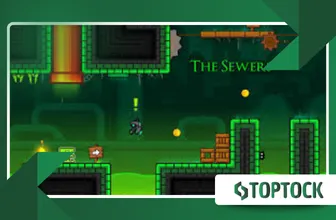
Geometry Dash
Geometry Dash transcends the typical arcade genre by offering a perfect blend of music, creativity, and extreme challenge that rewards patience and dedication above all.
Whether you are a casual player enjoying the official soundtracks or a hardcore creator building the next viral masterpiece, the game provides an endless platform for self-expression.
As we move through 2026, the boundaries of this rhythmic world continue to expand, proving that a simple square can lead to an epic adventure.
For more technical insights into rhythm game development, visit the GDC Vault for industry-leading expert analysis.
Frequently Asked Questions
1. Is Geometry Dash free to play?
There is a free version called “Geometry Dash Lite,” but the full version requires a small one-time purchase to unlock the editor and all levels.
2. Can I use my own music in the levels?
Yes, the PC version integrates with Newgrounds, allowing creators to use a massive library of independent tracks for their custom-built level designs.
3. What does “Noclip” mean in the community?
Noclip is a cheat or hack that allows the icon to pass through objects without dying, usually used by creators to showcase level aesthetics.
4. How do I unlock new icons and colors?
You earn new icons by completing specific achievements, collecting secret coins, finishing map packs, or opening chests in the various in-game treasure rooms.
5. Why is my game lagging on my phone?
High-detail levels with many objects can cause lag; try enabling “Low Detail Mode” (LDM) in the level settings to improve performance on older devices.
++ A Journey Through Rhythm, Reflex, and Resilience
Popular Now