Gwent: Play Card Logic Battles in The Witcher Universe

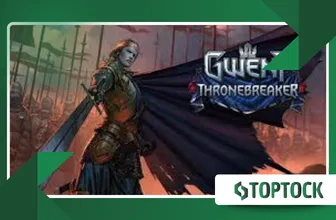
The captivating card game Gwent, born in the taverns of Velen and Novigrad, has transcended its origins as a mere minigame within The Witcher 3 to become a standalone digital collectible card game (TCG) phenomenon.
Anúncios
This transformation showcases a masterclass in game design, blending simple rules with profound strategic depth, deeply rooted in the lore created by Andrzej Sapkowski and expanded by CD Projekt RED.
The journey of Gwent from a beloved side activity to a competitive esports title is a compelling narrative for any strategy enthusiast.
What Makes Gwent Different from Other Digital Card Games?
Gwent‘s unique selling proposition lies in its core mechanics, fundamentally different from peers like Hearthstone or Magic: The Gathering Arena.
Traditional TCGs often focus on life points and mana curves. Gwent, however, pivots entirely on a best-of-three round structure, demanding careful resource management across an entire match.
Anúncios
Winning a round doesn’t deplete the opponent’s “life” but forces them to commit valuable cards, known as “bleeding.”
The game is played across two main rows—Melee and Ranged—with cards assigned strength values.
The player with the highest total strength on the board at the end of a round wins.
The brilliance of this design is that card advantage, or having more cards than your opponent, is often more critical than the immediate score.
Mastering the ‘pass’ mechanism, knowing when to concede a round to preserve resources, is the mark of a seasoned player.
Why is Resource Management the Key to Winning in Gwent?
Effective resource management is the strategic heartbeat of Gwent.
Since players draw all their cards at the start and can only slightly alter their hand between rounds, every card plays a disproportionately large role.
The decisions you make in Round 1 directly impact the remaining two.
Consider this original example: a player with a strong Round 1 hand might achieve a high score early.
Instead of committing their ‘finisher’ card, they might ‘pass’ after gaining a significant lead.
This forces the opponent to either expend more valuable resources to catch up or concede the round, granting the first player card advantage for Round 3.
This is the essence of Gwent‘s logic battles: winning the war, not every skirmish.
How Does Gwent’s Lore Enhance the Strategic Depth?
The deep integration of The Witcher universe lore adds a rich layer of thematic complexity to the gameplay.
Each of the six major factions—Northern Realms, Nilfgaard, Scoia’tael, Skellige, Monsters, and Syndicate—possesses distinct playstyles that mirror their in-game characteristics.
++ Stardew Valley (puzzle mini-games)
For instance, the Nilfgaardian Empire excels at manipulating the opponent’s cards and tactics, reflecting their political subterfuge.
Conversely, the Skellige faction focuses on discarding and playing cards from the graveyard, symbolizing their Viking-like resilience and revival from battle.
This thematic consistency means learning the lore provides intuitive clues for strategic deck construction.
What are the Current State and Competitive Scene of Gwent in 2025?
As of 2025, Gwent maintains a dedicated and passionate competitive following.
The transition to a new phase of development and support from CD Projekt RED, focusing on community-driven content and balance, has kept the game fresh.
The competitive circuit, while perhaps smaller than the biggest TCGs, is known for its high level of strategic play and consistent community events.
Read more: Candy Crush Saga
The ongoing commitment to releasing new card sets and making crucial balance changes ensures the meta-game continuously evolves.
This constant flux demands that professional players adapt their strategies, preventing any single deck from dominating for too long.
According to a 2024 analysis of digital TCG engagement by SuperData Research, Gwent exhibited one of the highest average playtime per active user, a testament to its compelling design and strategic gravity.
| Faction | Primary Playstyle | Core Strategy |
| Northern Realms | Boosting, Crew/Siege Engines | Long-round commitment, point generation |
| Nilfgaard | Spying, Deck Manipulation | Control, resource denial, forcing passes |
| Scoia’tael | Movement, Harmony, Traps | Board positioning, proactive boosts |
| Skellige | Discarding, Graveyard Revival | Damage, carry-over points between rounds |
| Monsters | Swarming, Deathwish | Overwhelming board presence, consumption |
| Syndicate | Crime, Coins, Profit | Engine abuse, resource management via currency |
Is Gwent a Strategy Game or a Luck-Based Card Game?
While the random element of the card draw certainly exists, Gwent fundamentally minimizes the impact of ‘RNG’ (Random Number Generation) compared to many other TCGs.
The ability to redraw cards and the best-of-three structure mean pure luck rarely decides a match.
Read here: Hole.io
It’s far more about intelligent decision-making and adapting to the current board state.
Here’s an example: Imagine an opponent plays a powerful “Engine” card that generates points every turn.
A skilled Gwent player will immediately recognize the threat and use a “Removal” card, even if it has a low point value, to neutralize the Engine.
A less experienced player might hoard the removal, trying to gain more points, only to be overwhelmed by the Engine’s continuous output.
This highlights that resource prioritization, a purely strategic choice, outweighs the luck of the draw.
It’s an analog to chess: you have a starting setup, and the rest is about calculating the opponent’s moves.
If the game isn’t primarily determined by drawing the ‘perfect’ card, but by meticulous management of known resources, how can anyone argue it’s merely luck-based?
Why Gwent Continues to Captivate Strategy Fans
Gwent is more than just a card game; it’s a brilliant exercise in economic logic and tactical foresight wrapped in the immersive aesthetic of The Witcher.
Its non-traditional scoring system, emphasis on card advantage, and deep faction mechanics offer a unique and highly rewarding strategic experience.
For those seeking a competitive game that prizes intellect and discipline over simple power plays, Gwent provides an unmatched digital arena.
The developers have successfully cultivated a game that feels organic, evolving, and deeply strategic, securing its place as a strategy titan in the digital TCG landscape.
Frequently Asked Questions
Is Gwent free to play?
Yes, the core game, officially titled GWENT: The Witcher Card Game, is completely free to play, with monetization primarily focused on cosmetic items and card kegs (packs) that can also be earned through gameplay.
Is Gwent still actively updated?
Absolutely. CD Projekt RED continues to provide balance patches and seasonal updates.
Furthermore, the community is playing an increasingly large role in content creation and balancing, ensuring the game’s longevity.
Can I play Gwent on mobile devices?
Yes, Gwent is available on both iOS and Android devices, featuring cross-platform play with the PC version, allowing players to compete globally regardless of their platform.
++ How to Win Every Gwent Match
++ GWENT’s Latest Expansion is here!
Popular Now