
Highway Rider: Ride Recklessly Through Traffic and Rack Up Points
Highway Rider delivers high-speed adrenaline directly to mobile devices by challenging players to weave through dense freeway traffic at reckless speeds.
Anúncios
Developed as an arcade racer, the game trades traditional track racing for high-stakes lane splitting, continuous speed boosts, and close-call scoring mechanics.
Players take control of custom motorcycles to push the limits of control, earning points by passing surrounding vehicles as closely as possible without triggering a devastating crash.
Whether you are looking to top local leaderboards or outrun law enforcement in specialized game modes, understanding how the game balances risk and reward is essential.
This comprehensive guide breaks down the core mechanics of Highway Rider, offering actionable techniques for executing close calls, optimizing speed boosts, choosing the right game modes, and maximizing overall scores.
Anúncios
Key Takeaways
- High-Risk Scoring: Scores scale based on proximity to traffic; passing closer to surrounding vehicles multiplies points quickly.
- Boost Management: Continuous use of gas and nitro increases overall speed and point multipliers, requiring precise micro-adjustments.
- Game Mode Variety: Modes like Arcade Mode focus on continuous point accumulation, while Fugitive Mode introduces aggressive police vehicles that alter steering strategies.
- Customization and Progression: Unlocking new riders and bikes improves visual style and unlocks distinct motorcycle performance profiles.
Understanding the Core Gameplay Mechanics
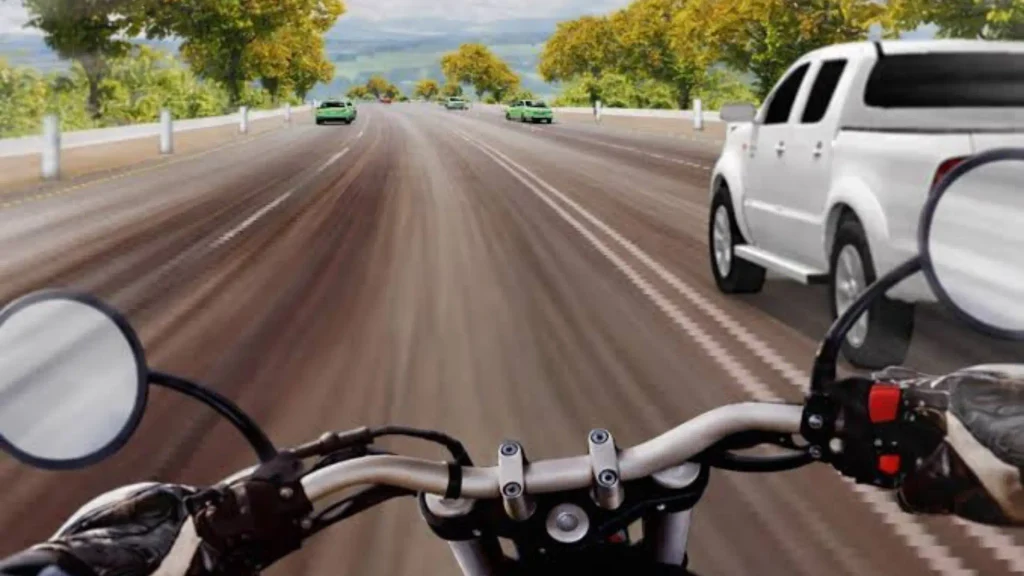
At its core, Highway Rider is built around continuous risk-taking. Unlike standard racing games that reward clean line selection on open circuits, this arcade racer rewards deliberate proximity to danger.
The primary scoring mechanism relies on close calls—passing within inches of cars, trucks, and semi-trailers while traveling at high speeds.
The game uses motion sensors (tilt controls) or precise touch-based directional controls to maneuver the motorcycle between tight lanes.
Every time a rider skims past a vehicle, the game triggers a close-call alert, adding immediate bonus points to the run.
Chain consecutive close calls together without resetting your momentum, and a score multiplier activates. However, the margins for error are extremely small.
Contact with bumper surfaces, side mirrors, or sudden lane changes instantly ends the run with ragdoll physics animations that detail broken bones and collision forces.
According to guidelines on motor vehicle safety published by the U.S. National Highway Traffic Safety Administration (NHTSA), real-world motorcycle operators must maintain safe following distances and avoid lane splitting due to severe collision risks.
Highway Rider deliberately flips these real-world safety standards on their head, encouraging virtual players to embrace aggressive riding habits inside a digital environment.
Mastering High-Score Strategies
Achieving top-tier scores requires more than just holding down the throttle. Success demands spatial awareness, quick reflexes, and disciplined risk management.
1. Lane Splitting and Positioning
Riding directly down the broken lines between traffic lanes provides the shortest distance to prospective vehicles on both sides.
++ Table Tennis Touch: Serve Up Competitive Matches with Smart AI
Positioning the bike between two parallel vehicles yields double close-call points, rapidly building the point multiplier.
2. Anticipating Traffic Patterns
Traffic flow is never entirely static. Large semi-trucks obscure vision, while smaller sedans can alter speed without warning.
Anticipate openings two to three vehicle lengths ahead rather than focusing solely on the vehicle directly in front of your front wheel.
3. Brake and Gas Modulation
While maximum speed increases point accumulation, temporary decelerations are vital.
Read more: Gravity Rider Zero: Race Futuristic Bikes Over Sci-Fi Tracks
Light tapping of the brakes allows players to set up cleaner entry angles between tightly clustered traffic before re-engaging the nitro boost.
Overview of Game Modes and Features
Highway Rider offers several modes designed to test different skill sets. The table below breaks down the structural differences, scoring priorities, and challenge levels of each primary mode.
| Game Mode | Primary Objective | Key Strategy | Risk Level |
| Arcade Mode | Accumulate maximum points on open highways. | Maintain continuous boosts and stack close calls. | Moderate to High |
| Fugitive Mode | Outrun pursuing police units while navigating traffic. | Dodge police barricades and avoid side bumps. | High |
| Multiplayer Mode | Race head-to-head against online opponents. | Balance aggressive speed with error-free lane navigation. | Very High |
Each mode requires a tailored tactical approach. Arcade Mode allows players to find a rhythmic flow through standard traffic.
Fugitive Mode introduces external pressures; police cruisers actively attempt to pit-maneuver or pin the motorcycle against guardrails, requiring defensive maneuvers alongside high-speed weaving.
++ Tile Busters Combo Chains That Unlock Bigger Rewards
Multiplayer Mode shifts the focus toward direct speed competition, where a single crash guarantees defeat against an opponent.
Customization, Riders, and Progression
Progress in Highway Rider is tied directly to performance. Completing runs, achieving distance milestones, and racking up close-call streaks reward players with in-game currency. This currency unlocks:
- Rider Characters: Up to 10 unique characters, each styled with distinctive helmets, suits, and aesthetic gear.
- Motorcycles: A variety of bikes ranging from lightweight street bikes to high-displacement superbikes.
- Custom Paint Schemes: Visual customization options that allow players to personalize their ride before heading online.
Upgrading to faster bikes changes handling characteristics significantly.
While top-tier motorcycles reach higher top speeds, their increased responsiveness requires finer control inputs to avoid oversteering into adjacent vehicles.
Research compiled by the Federal Highway Administration (FHWA) highlights how high-speed control requires precise inputs, a principle reflected in the game’s physics engine where small adjustments yield large directional shifts at max speed.
Practical Checklist for New Players
To maximize point output and minimize premature crashes during initial runs, follow this operational checklist:
Calibrate Controls: Ensure tilt sensitivity or touch response matches your reaction speed before attempting high-speed runs.
Identify Target Gap: Aim for open pockets between vehicles rather than chasing every individual close call.
Save Boosts for Straightaways: Activate nitro boosts on clear highway segments to maximize distance and maintain safe trajectories.
Learn Traffic Sizes: Semi-trucks provide longer close-call zones but block visual angles; use them carefully to farm points.
Analyze Wipeouts: Pay attention to collision replays to identify recurring positioning mistakes or timing errors.
Conclusion
Highway Rider remains a staple of mobile arcade racing by focusing strictly on high-stakes speed and close-call mechanics.
By understanding lane positioning, managing boost timing, and selecting the right game mode for your skill level, you can consistently break high scores and climb the leaderboards.
Pick your rider, fine-tune your controls, and test your reflexes on the open road.
Frequently Asked Questions
What is the primary objective in Highway Rider?
The primary goal is to score as many points as possible by driving at high speeds and performing “close calls”—passing extremely close to traffic vehicles without crashing.
How do close calls work in the game?
A close call triggers whenever your motorcycle passes near another vehicle at high speed. Successive close calls build a score multiplier, significantly increasing point output.
Can you play Highway Rider offline?
Yes, single-player modes like Arcade Mode and Fugitive Mode can be played offline. However, head-to-head multiplayer races and leaderboard syncs require an active internet connection.
What happens when you crash in Highway Rider?
Crashing immediately terminates the run, triggering a ragdoll physics simulation that displays the impact forces and simulated injury details before showing your final score summary.
++ Highway Rider Gameplay #17 | Crazy High Speed Traffic Ride
Popular Now