
Quantum Puzzle Lab: Experiment with Physics-Based Logic Challenges and Smart Solutions
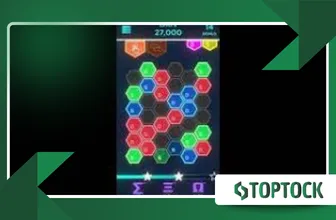
Quantum Puzzle Lab doesn’t merely present puzzles—it quietly shifts the ground beneath how we think about problem-solving itself.
Anúncios
What initially looks like a clever intellectual exercise soon reveals a more demanding proposition: thinking like a system, not just a solver.
There’s something subtly disorienting about that shift. Instead of chasing the “right answer,” you begin navigating possibilities, weighing probabilities, and noticing how each decision reshapes the landscape ahead.
To orient yourself without over-structuring the experience, here’s a loose path through the ideas explored below:
- The nature of physics-based puzzles
- Cognitive shifts they provoke
- How they differ from traditional logic systems
- Practical ways to approach them
- Common questions worth clarifying
How does physics-based logic redefine puzzle solving?
Traditional puzzles tend to reward recognition. You’ve seen something like this before, you apply a familiar pattern, and the solution clicks into place. Efficient, yes—but also predictable.
Anúncios
Physics-based challenges move differently. They behave more like living systems than static problems. Concepts such as superposition or causality aren’t just references—they actively shape the puzzle’s internal logic.
Solving becomes less about spotting patterns and more about tracing consequences. You don’t simply answer a question; you explore a chain reaction. That distinction changes everything.
Why is Quantum Puzzle Lab gaining attention among experts?
There’s a growing discomfort in academic and professional circles with siloed thinking. Problems in the real world rarely arrive labeled by discipline, yet most training still is.
Quantum Puzzle Lab sits right in that tension. It blends physics, logic, and cognitive science in a way that feels less like a category and more like a process. That alone explains part of its appeal.
More interesting, though, is how it mirrors real decision-making environments. Situations where variables interact, outcomes remain uncertain, and clarity only emerges after engagement—not before.
What are the cognitive benefits of physics-driven puzzles?
At first glance, the benefits seem familiar: improved memory, sharper reasoning, better focus. All true—but also incomplete.
What actually changes is how the mind handles uncertainty. Instead of resisting ambiguity, it starts to work with it. That’s a quieter, more profound shift.
++ Happy Glass Creative Solutions Players Wish They Found Earlier
Engaging with these puzzles feels a bit like training a muscle you didn’t know you relied on. The ability to hold multiple possibilities at once, without rushing toward closure, becomes noticeably stronger over time.
How does Quantum Puzzle Lab compare to traditional logic systems?
The contrast becomes clearer when placed side by side. Traditional puzzles operate within fixed boundaries, while physics-based ones tend to stretch or even redefine those limits mid-process.
| Feature | Traditional Logic Puzzles | Physics-Based Puzzles |
|---|---|---|
| Core Mechanism | Pattern recognition | System simulation |
| Cognitive Demand | Moderate | High |
| Real-world Application | Limited | Extensive |
| Learning Curve | Gradual | Steeper |
| Engagement Level | Predictable | Dynamic |
What stands out isn’t just complexity—it’s responsiveness. Physics-based puzzles react. They push back. And that resistance forces deeper engagement.
What principles power the challenges?
Beneath the surface, these puzzles borrow heavily from physics—not in a decorative way, but structurally. Ideas like entropy or probabilistic outcomes aren’t metaphors; they’re mechanics.
Quantum Puzzle Lab uses these principles to create environments where outcomes aren’t fixed. Instead, they emerge. That distinction can feel unsettling at first, especially if you’re used to deterministic systems.
Read more: Merge Mansion Puzzle Mysteries That Fans Still Debate Online
But there’s also a certain elegance in it. Solutions don’t appear fully formed—they unfold, often in ways you didn’t anticipate.
How can beginners approach complex quantum-inspired puzzles?
The instinct to solve everything at once tends to backfire here. A more effective approach feels almost counterintuitive: slow down, isolate variables, and resist the urge to rush toward conclusions.
Beginners often benefit from treating each puzzle like a small experiment. Try something, observe what changes, adjust. It’s less about getting it right immediately and more about refining your model of what’s happening.
Progress, in this context, feels incremental—but it accumulates faster than expected.
Why does uncertainty play a central role in these puzzles?
Uncertainty isn’t a side effect here—it’s the engine. Without it, the entire structure collapses into something far more predictable and, frankly, less interesting.
There’s a common misconception that uncertainty weakens decision-making. In practice, it often sharpens it. When outcomes aren’t guaranteed, attention becomes more deliberate.
++ Idle Army Base: Train Recruits, Expand Facilities, and Conquer
Working through that tension builds a kind of mental flexibility that rigid systems rarely demand. You stop looking for certainty and start working with probability instead.
How does Quantum Puzzle Lab support real-world skill development?
What begins as a puzzle exercise starts to echo beyond it. The skills developed—especially around modeling scenarios and evaluating risk—translate surprisingly well into practical contexts.
Quantum Puzzle Lab doesn’t teach solutions so much as it teaches approaches. That distinction matters in fields where problems don’t arrive neatly defined.
Whether in engineering, finance, or data analysis, the ability to think in systems rather than isolated variables becomes a clear advantage.
What role does data play in optimizing puzzle-solving strategies?
Patterns emerge when you start paying attention to how you solve, not just whether you solve. Time spent, paths taken, decisions reversed—these details quietly map your cognitive habits.
Data, in this sense, becomes a mirror. Not always flattering, but undeniably useful. It reveals tendencies you might otherwise overlook.
Over time, this feedback loop sharpens strategy. You begin to recognize not just better solutions, but better ways of thinking.
How can advanced users maximize learning outcomes?
At a certain level, solving puzzles stops being the main objective. Understanding how you solve them takes center stage.
Advanced users often adopt a more reflective approach—almost like running parallel analyses. One track follows the puzzle itself; the other observes the reasoning process behind it.
That dual awareness creates a deeper kind of mastery. Not just competence, but control over how insights are formed and applied.
FAQ:
What makes physics-based puzzles different from regular brain teasers?
They behave less like static problems and more like systems in motion. Instead of identifying patterns, you engage with interactions that evolve as you act.
Is prior knowledge of quantum mechanics necessary?
Not strictly. While familiarity helps, many puzzles guide you into the concepts gradually. Understanding tends to emerge through interaction rather than study alone.
How often should someone practice to see improvement?
Consistency matters more than intensity. Short, regular sessions create stronger cognitive adaptation than occasional deep dives.
Can these puzzles improve professional performance?
They can—especially in areas requiring adaptability and structured reasoning. The transfer isn’t immediate, but it becomes evident with sustained engagement.
Closing reflections
Quantum Puzzle Lab doesn’t offer quick wins or easy clarity. What it provides instead is something rarer: a space where thinking itself becomes the challenge.
There’s a quiet shift that happens after enough exposure. Problems start to feel less like obstacles and more like systems waiting to be understood.
That shift doesn’t just change how you solve puzzles. It changes how you approach complexity—inside and outside the lab. And once that perspective settles in, it’s difficult to go back.
++ What does it take to make a learning game for quantum physics?
++ A Physics Lab Inside Your Head: Quantum Thought Experiments as an Educational Tool
Popular Now