La actualización del rompecabezas Happy Glass trae nuevas mecánicas creativas.
Los juegos de puzles para móviles se basan en una física clara y soluciones satisfactorias, pero mantener el interés del jugador requiere una innovación continua.
Anuncios
Lo último Actualización del rompecabezas de cristal feliz Introduce nuevos elementos interactivos, transformando los sencillos niveles de enrutamiento de líquidos en complejos desafíos espaciales.
Estas nuevas mecánicas físicas ponen a prueba la sincronización dinámica, la percepción espacial y la eficiencia de los recursos.
Conclusiones clave
- Los portales ambientales interactivos alteran el impulso de los fluidos y los puntos de destino.
- Las zonas de temperatura cambian dinámicamente el estado del agua, transformándola en hielo o vapor en pleno vuelo.
- Las plataformas de inversión de gravedad permiten crear arquitecturas de rompecabezas no lineales.
- Los sistemas de puntuación avanzados premian las técnicas de dibujo minimalistas y el mínimo desperdicio de agua.
- El rendimiento optimizado del motor proporciona una mayor fluidez en la velocidad de fotogramas durante simulaciones de fluidos complejas.
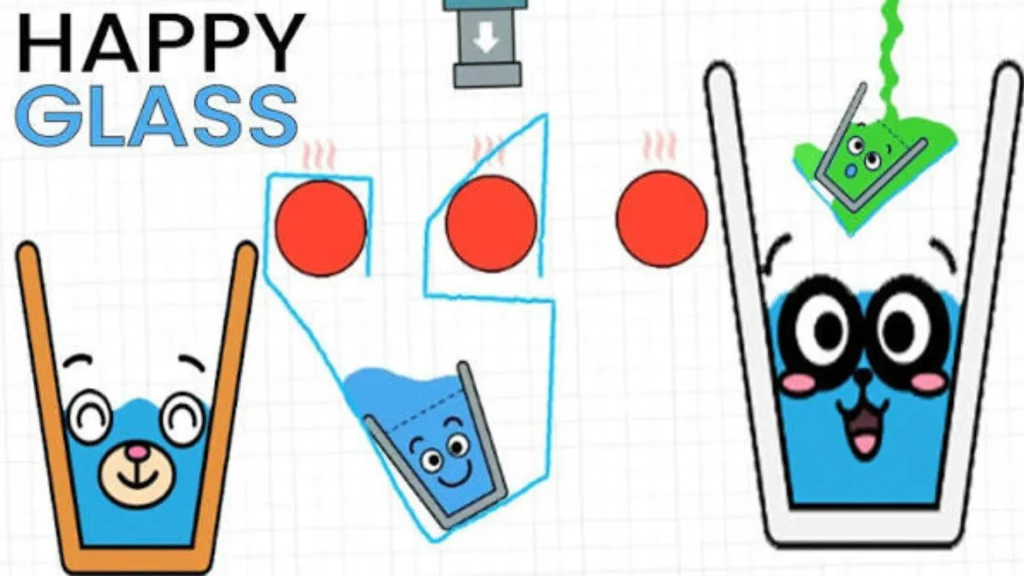
¿Cuáles son las nuevas mecánicas de la actualización del rompecabezas Happy Glass?
La mecánica de juego principal de Happy Glass siempre se ha basado en dibujar líneas precisas para guiar el agua hacia un recipiente de vidrio sonriente.
Anuncios
Esta nueva versión amplía esa fórmula al introducir modificadores de línea dinámicos y obstáculos ambientales reactivos.
En lugar de barreras estáticas, los jugadores ahora interactúan con portales dinámicos, cámaras térmicas y campos de gravedad localizados.
Los portales funcionan como enlaces espaciales dinámicos en todo el campo de juego. Al pasar un chorro de agua por un portal naranja, el líquido se redirige inmediatamente hacia un portal azul adyacente, manteniendo la velocidad y el grosor del chorro.
Esta mecánica obliga a los jugadores a calcular las trayectorias de salida en lugar de basarse en las pendientes descendentes estándar de la gravedad.
Las cámaras térmicas introducen la física de cambios de estado directamente en la corriente de agua.
Las zonas calientes vaporizan el agua convirtiéndola en vapor ascendente, lo que requiere la colocación de vasos invertidos o barreras de contención superiores.
Las zonas frías congelan instantáneamente el agua en movimiento, convirtiéndola en bloques de hielo sólidos y transformando los problemas de dinámica de fluidos en desafíos estructurales de peso y equilibrio.
Las plataformas de esponja absorbente introducen una restricción de tiempo activa para nivelar las soluciones.
El líquido que entra en contacto con estos bloques porosos reduce rápidamente el volumen total del fluido. Los jugadores deben diseñar trayectorias que eviten por completo estas superficies o dirigir los chorros a alta velocidad para minimizar el tiempo de contacto.
| Tipo mecánico | Efecto ambiental | Cambio de estrategia del jugador | Nivel de peligro primario |
| Portales espaciales | Reubicación instantánea de vectores de fluidos | Proyección de trayectoria y control de momento | Moderado |
| Zonas térmicas | Cambio de fase (de líquido a vapor o hielo) | Construcción estructural y colección invertida | Alto |
| Plataformas de gravedad | Inversión del vector en zonas localizadas | Enrutamiento de línea ascendente y equilibrio del contrapeso | Alto |
| Superficies absorbentes | Reducción del volumen de fluido al entrar en contacto | Colocación de líneas sin contacto y enrutamiento de alta velocidad | Extremo |
¿Cómo cambian las plataformas de gravedad el diseño de niveles?
Las almohadillas de inversión de la gravedad alteran el comportamiento fundamental de los fluidos dentro de áreas delimitadas localizadas.
Los chorros de agua estándar se mueven hacia la parte inferior de la pantalla debido a la aceleración descendente simulada.
Al entrar en una plataforma de gravedad, el agua fluye hacia arriba, hacia unos vasos invertidos situados en la parte superior de la rejilla.
++ Los intentos de batir récords de saltos en pila siguen siendo tendencia entre los aficionados.
Estas plataformas requieren configuraciones de líneas de varios niveles. Los jugadores deben construir líneas guía iniciales para dirigir el agua hacia el campo gravitatorio, seguidas de embudos invertidos secundarios para recoger el líquido que fluye hacia arriba.
Este enfoque de dos fases añade profundidad a los puzles de la fase final del juego, eliminando las soluciones triviales de una sola línea.
La planificación espacial se vuelve significativamente más compleja cuando las plataformas de gravedad se superponen con los portales.
Un chorro de agua que entra por una plataforma de gravedad ascendente puede canalizarse directamente hacia un portal en el techo, saliendo por un portal lateral con impulso horizontal.
Gestionar estos vectores de fluidos multidireccionales exige un análisis cuidadoso antes de trazar el primer trazo.
El diseño en función de campos gravitatorios variables requiere comprender las simulaciones de dinámica de fluidos.
Los desarrolladores utilizan frecuentemente marcos detallados en Artículos de investigación de ACM SIGGRAPH, para simular en tiempo real la tensión superficial y las condiciones de contorno en motores de física móviles.
La aplicación de estos principios garantiza que los flujos de fluidos sigan siendo predecibles incluso cuando las fuerzas direccionales cambian instantáneamente.
¿Por qué es crucial la eficiencia de la línea de producción para obtener calificaciones de tres estrellas?
Para obtener una calificación de tres estrellas, ahora se depende del ahorro de tinta y la conservación del líquido. Históricamente, el rendimiento se evaluaba principalmente según el consumo del medidor de tinta.
El sistema de puntuación actualizado mide tanto las reservas de tinta restantes como el volumen exacto de agua que se suministra de forma segura al vaso.
Leer más: Las misiones de Johnny Trigger ofrecen secuencias de acción más rápidas.
Derramar líquido reduce instantáneamente el multiplicador de puntuación final. Dibujar barreras más largas y gruesas consume rápidamente la barra de tinta, por lo que las soluciones minimalistas de un solo trazo son imprescindibles para alcanzar los primeros puestos de la clasificación.
- Minimice el contacto superficial entre las líneas trazadas y los chorros de agua para reducir la pérdida por fricción.
- Utilice la geometría natural del nivel en lugar de construir estructuras de tinta completas.
- Dirija el agua hacia corrientes estrechas y de alta velocidad para evitar la dispersión por salpicaduras.
- Mecanismos de activación mediante clavijas cortas de redirección de impulso en lugar de paredes completas.
- Ancle las estructuras flotantes a los soportes fijos existentes para ahorrar tinta.
Es igualmente vital comprender la distribución del peso de las líneas dibujadas. El motor de física trata las formas dibujadas gruesas como cuerpos rígidos sólidos con masa real.
++ Mecánicas de supervivencia en Frostpunk Beyond the Ice explicadas
Crear un embudo excesivamente pesado en la parte superior puede provocar que la estructura se vuelque y bloquee por completo el flujo de líquido, arruinando un diseño de conducto que de otro modo sería válido.
¿Cómo mejora la actualización el rendimiento de la física?
El hardware móvil exige algoritmos de computación eficientes para gestionar las interacciones de partículas fluidas en tiempo real sin que disminuya la velocidad de fotogramas.
Las optimizaciones realizadas en este parche reducen los cálculos de superposición de partículas, lo que permite una renderización más fluida en teléfonos inteligentes de gama media.
Los algoritmos avanzados de agrupación de partículas agrupan las gotas de fluido contiguas en grupos de corrientes cohesivas.
Esto reduce el número total de comprobaciones de colisión necesarias en cada fotograma, al tiempo que preserva el movimiento realista de los fluidos y los comportamientos de salpicadura realistas al impactar contra las superficies.
Los análisis comparativos independientes y los análisis de software móvil publicados a través de la Biblioteca Digital IEEE Xplore destacan cómo las modernas arquitecturas gráficas móviles procesan de manera eficiente las actualizaciones del motor de física 2D aceleradas por hardware.
Estas mejoras técnicas garantizan una sincronización de fotogramas uniforme cuando cientos de gotas de agua individuales interactúan simultáneamente con la geometría personalizada del jugador.
La reducción de la sobrecarga de procesamiento evita el retardo de entrada durante los momentos críticos del trazado de líneas. La representación fluida de las líneas permite ángulos exactos, evitando fugas de agua inesperadas a través de pequeños huecos entre las líneas.
¿Cuáles son las mejores estrategias para dominar nuevos niveles?
Para superar los niveles mejorados, se requiere una resolución sistemática de problemas, en lugar de dibujar al azar. Analizar el diseño de los niveles antes de trazar el primer trazo ahorra tinta y evita reinicios inmediatos.
Primero, identifique los principales riesgos ambientales entre la tubería de origen y el objetivo de vidrio. Tenga en cuenta las zonas térmicas y los límites gravitacionales para trazar el recorrido necesario del flujo.
En segundo lugar, pruebe con pequeños soportes de redirección en lugar de rampas de cerramiento completas.
Un solo punto pequeño o una línea ligeramente inclinada suelen redirigir el impulso del fluido lo suficiente como para despejar grandes huecos sin consumir mucha tinta.
En tercer lugar, analiza la estabilidad estructural de tu diseño. Los campos de inversión de la gravedad ejercen una fuerza ascendente sobre los objetos dibujados, lo que significa que las líneas sin anclar dentro de estas zonas flotarán a menos que se apoyen contra puntos de anclaje sólidos.
Por último, tenga en cuenta la inercia del fluido al diseñar rampas de acceso a los pórticos.
El agua que entra por un orificio a gran velocidad sale con la misma fuerza, lo que requiere embudos de recogida más anchos en el extremo de salida para evitar derrames.
Preguntas frecuentes
¿Cómo desbloqueo las nuevas fases mecánicas en Happy Glass?
Completa todos los paquetes de la fase principal hasta el nivel 100 para desbloquear automáticamente la campaña de mecánicas ampliadas.
¿Afecta la temperatura a las líneas dibujadas en la nueva actualización?
Las líneas trazadas con lápiz permanecen estáticas en todas las zonas de temperatura, pero las zonas de calor destruyen rápidamente las plataformas de esponja temporales.
¿Por qué desaparece el agua antes de llegar al vaso en los cambios de temperatura?
Al hacer pasar agua por cámaras de alta temperatura, el líquido se convierte en vapor. Debe dirigir el vapor hacia campanas de recolección o evitar por completo las zonas de calor.
¿Se pueden desactivar las plataformas de gravedad con barreras retraídas?
Trazar líneas a través de una plataforma de gravedad no desactiva el campo; el agua que pasa por dentro del campo invertirá su dirección independientemente de las estructuras dibujadas.
++ Happy Glass: Análisis del diseño del juego
++ Juegos de pelota – Torre de cristal feliz 1.0
Popular ahora