Rise of Kingdoms Update Introduces Strategic Improvements
A recent Rise of Kingdoms update introduces meaningful strategic improvements that shift how players manage march control, alliance coordination, and Season of Conquest preparation.
Anúncios
Rather than relying solely on raw troop counts or passive stat bonuses, governors now face tighter tactical decisions on the open field and during cross-kingdom KvK (Kingdom vs. Kingdom) campaigns.
For competitive players and alliance officers across the United States, understanding these adjustments is essential before committing speedups, sculptures, or equipment materials to a new meta.
This breakdown examines the core tactical changes, compares old mechanics with updated systems, and outlines practical steps to adapt your roster and alliance strategy without wasting resources.
Key Takeaways
- Open-field combat now rewards active micro-management: Updated march responsiveness, target-switching behavior, and terrain awareness reduce the effectiveness of passive “deathball” clustering.
- Alliance coordination tools streamline KvK rallies: Improved rally markers, garrison visibility, and role assignments help leadership teams react faster during high-traffic Pass openings.
- Commander pairing flexibility has expanded: Subtle adjustments to rage generation and area-of-effect (AoE) radius caps encourage hybrid utility pairings alongside traditional pure-damage setups.
- Resource and equipment planning requires stricter prioritization: Crafting and armament upgrades remain bottlenecks, making targeted investment more important than spreading materials across multiple troop types.
- Verification note on patch specifics: Because Lilith Games releases rolling updates across different kingdom seasons, exact numerical values and patch build numbers should be confirmed against your in-game system mail before resetting talent trees.
Why This Rise of Kingdoms Update Matters for Competitive Play
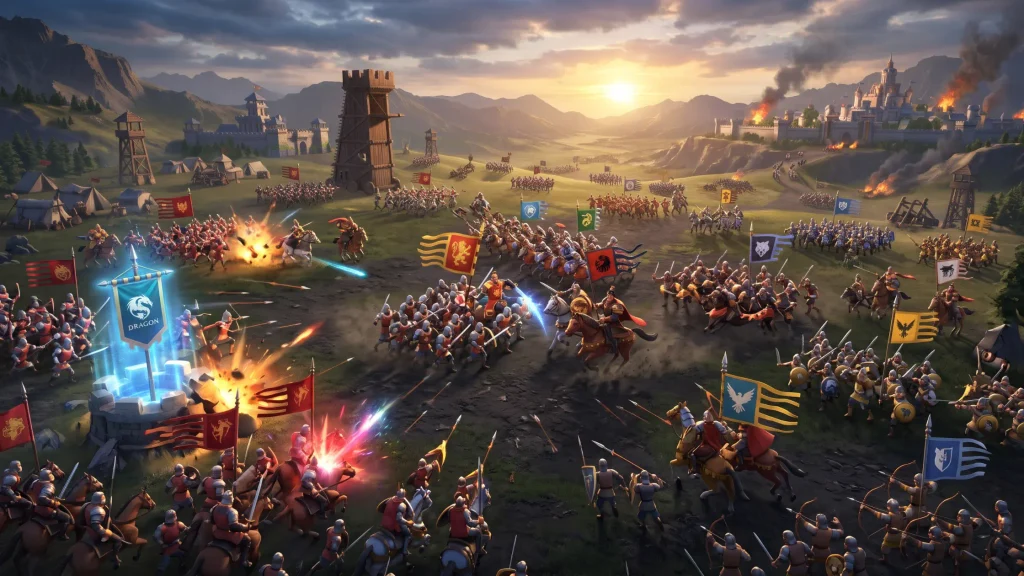
Over the past several Seasons of Conquest, large-scale open-field battles often devolved into dense clusters of marches trading AoE skill damage until one side ran out of hospital capacity.
Anúncios
While commander diversity improved through museum buffs and armaments, the underlying mechanics of march movement and rally communication still created friction during peak KvK hours.
This Rise of Kingdoms update directly targets that friction. By refining how marches respond to movement commands and giving alliance leaders clearer battlefield visibility, the patch shifts the advantage toward disciplined execution.
Players who actively flank, bait enemy skills, and rotate garrison captains gain a measurable edge over opponents who rely purely on VIP status or older stat-stacking habits.
Core Strategic Improvements in the Latest Patch
Open-Field March Control and Pathing
March responsiveness is one of the most noticeable upgrades for active field fighters.
Previously, pulling a low-health march out of a crowded brawl often resulted in awkward pathing delays or unintended aggro from nearby enemy units.
The updated pathing logic improves collision handling when disengaging from multi-march engagements.
Marches respond more cleanly to rapid drag-and-drop commands, making hit-and-run cavalry tactics and infantry frontline screening far more reliable.
++ League of Legends Wild Rift Reveals Upcoming Champions
Players can now repostion fragile archer or siege-support marches behind tankier infantry lines with fewer wasted action points and reduced hospital bills.
Alliance Rally and Garrison Coordination
Large KvK battles frequently fail not from a lack of troop power, but from communication breakdowns in alliance chat.
During chaotic Pass 4 or King’s Land openings, officers struggle to track who is reinforcing a flag, which captain holds the garrison, and when a counter-rally needs to launch.
The update enhances battlefield markers and rally interface indicators so officers and rank-and-file members share clearer real-time information.
Improved visual cues around rally fill status, troop composition limits, and garrison captain swaps help prevent mixed-troop errors that weaken defensive structures.
Read more: Wuthering Waves Patch Notes Reveal Gameplay Improvements
For alliances operating across multiple US time zones, clearer on-map indicators also reduce reliance on constant voice-chat callouts during off-peak hours.
Commander Pairing and Rage Economy Adjustments
Rather than completely overhauling existing legendary commanders, the patch introduces targeted refinements to rage accumulation and skill-cycle consistency in multi-target fights.
These adjustments prevent single meta pairings from dominating every battlefield scenario regardless of terrain or march count.
Support and secondary debuff commanders gain subtle value when paired with primary nukers, as consistent rage cycling allows teams to apply defense reductions or march-speed penalties right before allied AoE skills trigger.
++ Skating Freestyle Extreme 3D: Perform Cool Tricks and Rule the Skatepark
As a result, alliance field groups benefit from bringing a balanced mix of pure damage, crowd control, and sustain rather than five identical primary damage marches.
Preparation and Progression Quality-of-Life Changes
Beyond active combat, the update refines several menu workflows tied to daily troop training, equipment forging, and event tracking.
Streamlined preset management lets players switch between open-field, canyon, and rally-fill gear configurations more quickly, lowering the risk of accidentally marching onto the field wearing gathering or peacekeeping equipment.
Comparing Previous Mechanics With the Updated System
Understanding how the patch alters day-to-day gameplay becomes much clearer when comparing the older mechanics directly against the updated systems.
The table below outlines the practical differences across key strategic areas.
| Strategic Area | Previous Mechanics | Updated System | Practical Gameplay Impact |
| Open-Field Disengagement | Marches frequently snagged on nearby units during retreats, leading to extra AoE damage taken. | Smoother collision pathing and faster response to directional drag commands. | Reduces severe hospital casualties for players who actively micro-manage retreats. |
| Rally and Garrison Visibility | Officers had to manually verify troop types and captain swaps through crowded menus. | Clearer status indicators for rally capacity, troop composition, and garrison leadership. | Lowers the risk of mixed-troop penalties during high-pressure flag defenses. |
| AoE and Rage Consistency | Dense march balls heavily favored raw multi-target damage over tactical positioning. | More balanced rage generation and target prioritization in multi-march skirmishes. | Encourages flanking, spreading marches, and mixing support commanders into field lineups. |
| Equipment and March Presets | Switching between PvP, PvE, and canyon setups required repetitive manual checks. | Faster preset toggling with clearer visual warnings before deploying marches. | Prevents costly mistakes such as fighting PvP battles with peacekeeping talent trees. |
This comparison highlights a clear design direction: the update rewards attentiveness and preparation rather than introducing massive power creep. Players do not necessarily need to abandon their current flagship commanders, but they do need to adjust how they position marches and coordinate with teammates.
Practical Guidance: How to Adapt Your Strategy
Transitioning smoothly into a new patch cycle requires disciplined resource management. Follow these practical steps to update your account and alliance workflow without falling into common post-patch traps.
Audit your current march presets before your next fight.
Open your march management screen and verify that every primary open-field pairing has the correct equipment set, armament formation, and talent tree assigned.
Test disengaged pathing in low-stakes skirmishes.
Before entering a major KvK zone, practice pulling a damaged march out of a three-march cluster during Ark of Osiris or friendly duels to get a feel for the updated retreat timing.
Standardize alliance marker protocols. Leadership teams should establish clear rules for who places rally, garrison, and retreat markers so the map stays readable during peak war hours.
Hold legendary sculptures for 7 to 14 days after major balance shifts.
Early impressions on social media often exaggerate minor buffs or nerfs; wait until top KvK alliances publish verified battle reports before investing 690 gold heads into a secondary commander.
Focus equipment materials on one primary troop specialty.
Spreading legendary blueprints across infantry, cavalry, and archers slows your power curve, whereas completing one refined set delivers immediate value in both open-field fights and flag rallies.
Common Mistakes to Avoid After a Patch
Even experienced governors lose unnecessary troops right after an update goes live. Watch out for these frequent errors:
Overreacting to unverified tier lists: Content creators often test new mechanics in isolated duels that do not reflect 50-versus-50 open-field lag or AoE caps.
Ignoring hospital capacity during aggressive field testing: Smoother march control can tempt players into pushing deeper into enemy territory than their healing speedups can sustain.
Forgetting to update garrison reinforcement rules: When rally and garrison UI elements change, alliance members sometimes send unrequested troop types unless leadership updates the pinned alliance notice.
Conclusion
The latest Rise of Kingdoms update strengthens tactical depth by improving march pathing, clarifying alliance rally tools, and encouraging smarter commander synergy on the open field.
While it does not invalidate well-built rosters, it rewards players who actively manage positioning, maintain clean presets, and coordinate closely with their alliance officers.
Before your next KvK engagement, take ten minutes to review your march presets, confirm the exact patch notes in your in-game system mail, and align with your alliance leadership on updated rally and marker protocols.
Frequently Asked Questions
Does this Rise of Kingdoms update require players to change their main troop type?
No. The strategic improvements focus on march responsiveness, alliance coordination, and combat consistency rather than invalidating infantry, cavalry, or archer rosters.
Players should stick with the troop type where they already hold their strongest equipment and commander investments.
How can I check the exact patch notes for my specific kingdom?
Open the in-game Mail icon, navigate to the System tab, and look for the latest developer update notice.
Because kingdoms in Preparation Season, Season 1 through 3, and Season of Conquest occasionally receive staggered feature rollouts, your system mail provides the most accurate list of active changes for your server.
Are older commanders still viable after these strategic improvements?
Yes, especially when paired with updated museum relics, strong armaments, and refined equipment.
While newer Season of Conquest commanders retain higher stat ceilings, improved march pathing and rage consistency help veteran commanders perform reliably in coordinated alliance field groups.
What is the fastest way to reduce hospital bills in open-field battles?
Use the updated march controls to pull damaged units back before they drop below half health, avoid fighting outnumbered inside enemy territory, and keep at least one tanky or debuff-focused march near your primary damage dealers to absorb initial focus fire.
++ Rise of Kingdom Releases 1.0.63 Update Adding More In-Game Content
++ Rise of Kingdoms Update 1.1.10: Starry Rendezvous Guide – New Events
Popular Now